Stupid snail eggs.
I have an affinity for eggs. Over easy. Scrambled. French omelets. Farm-fresh or, you know, the standard grocery-store variety. Whatever. They're the perfect food. My culinary school teacher at CSCA, Chef Stephan, told me that every egg has the exact amount of biotin (needed by the human body) to break down the exact amount of fat found in one egg. Name another food that does all that work for you. Ok, maybe celery. But for taste? And yes, those are hen eggs. The kind you eat. But every egg holds some sort of promise, doesn't it? Baby blue jays. Baby snakes. Caviar. All good things in small packages.
But baby snails? That's where I draw the line.
Sometime around the last full moon (a few weeks back) the mud snails of Duxbury Bay started laying eggs. It's a seasonal thing and will happen a few more times before mid June. They'll hatch and make new snails which will spawn and lay more eggs. This is the cycle we live in.
But it's where the eggs land that just kill me.
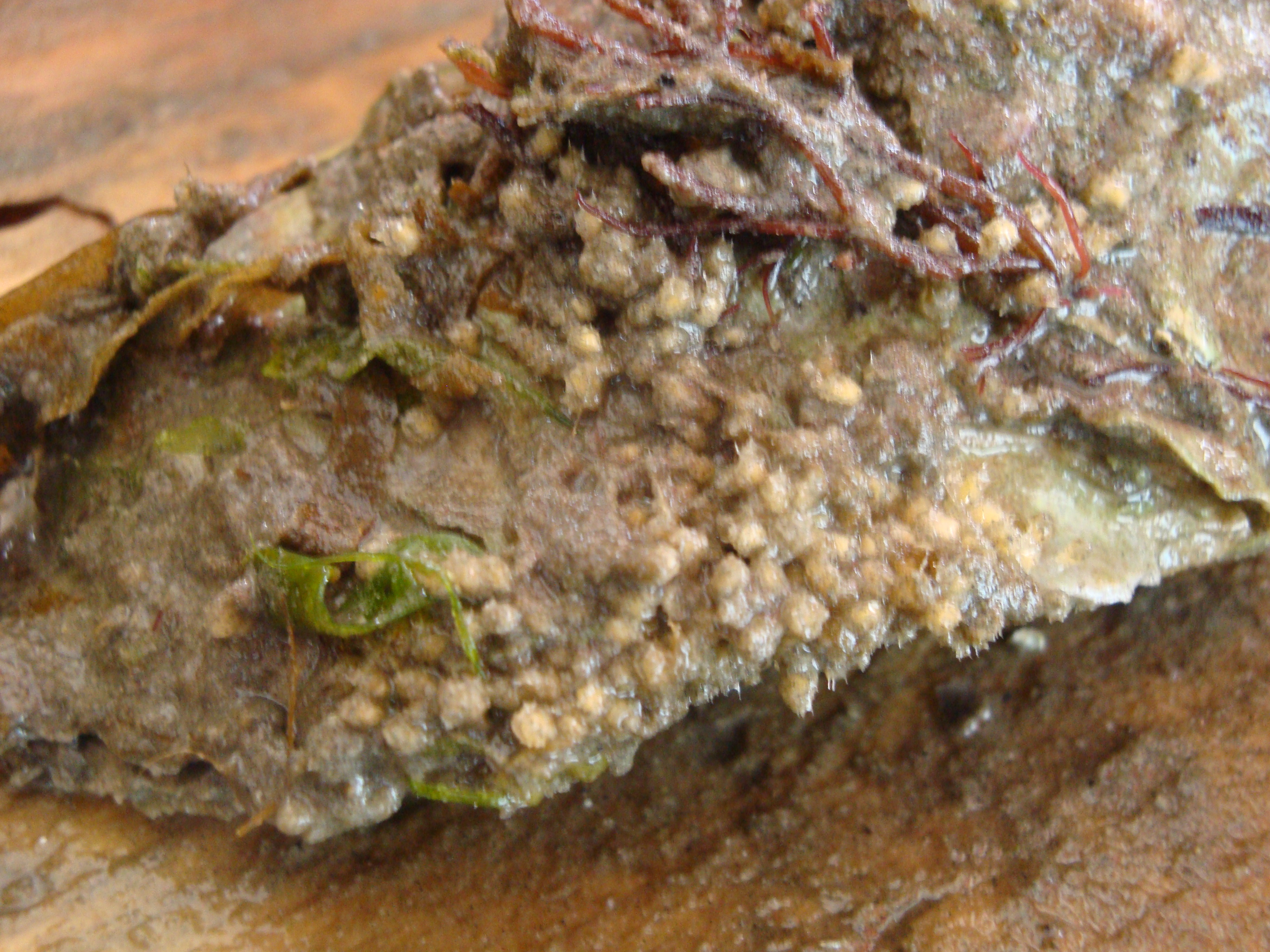
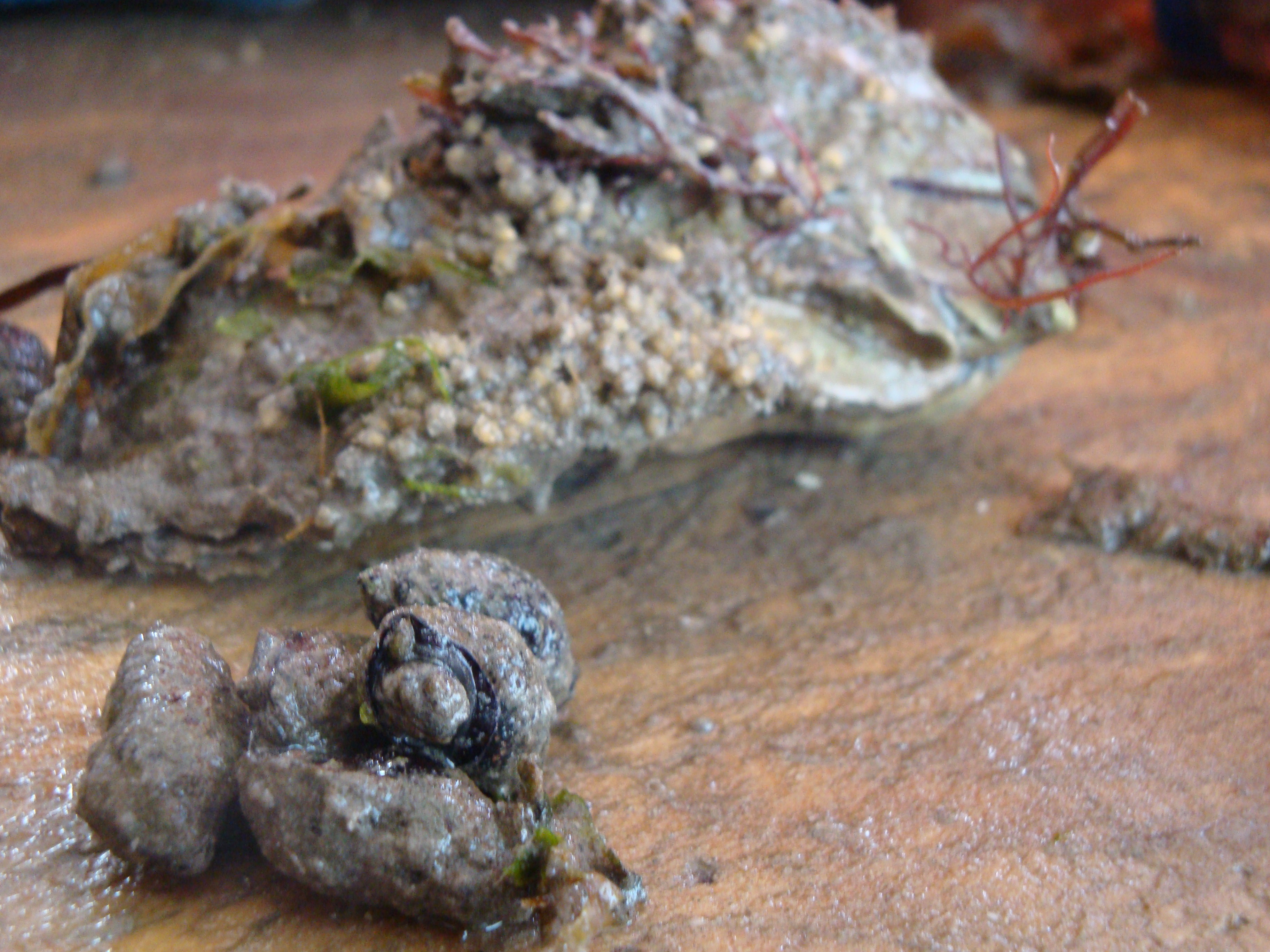
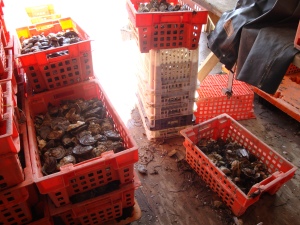
The eggs adhere to whatever underwater, stationery surface they can find and once they stick, they're on like glue. That could be old clam cages. Seaweed. Our oysters. In fact, our oysters are the eggs' most favored landing place; all those nooks and crannies and divets in the shells are like warm little caves that the eggs can hide out in. Crate after crate, oysters have been coming back blanketed with these little, woolly nuisances. And it is a royal pain in the ass.
Imagine turning over a crate of a couple hundred oysters, all of them covered in a thin blanket of these tiny slivers of minced garlic. Imagine pulling out a stainless steel scrub brush whose head is the size of a post-it note and rubbing away at the mottled brown shell to get every miniature egg separated from its landing spot. Imagine tightening one fist around an awkward oyster and the other around the handle of the brush and scouring away, getting just a few eggs off with each stroke. The eggs scream off the brush, hitting you, your neighbor, your neighbor's eye, and every other object in plain sight to the point where you see them when you close your eyes at night. Imagine trying to come up with a super-strength brine, or vinegar-based solution that will loosen the eggs but not ruin the oysters. You turn to your neighbor, who is wiping snail eggs off their face, and talk with them about this idea. But instead of coming up with a brine, you accept your fate and go back to work, scrubbing until your fore finger and thumb are blistered. Or until your eyes cross. Or until the stainless steel spokes of your brush are eaten away to the stubs.
You brush and brush only to find that all you've done, after a full two minutes of scrubbing and cursing, and scrunching up your face, is uncovered yet another single, ugly oyster shell.
Imagine repeating it a hundred or two hundred times to get your crate of oysters cleaned.
Then imagine this: Imagine, over the course of a long weekend, going to a restaurant (or three) and ordering a dozen (or three) of your very own oysters. Imagine the plates arriving to the table, all sparkling and clean and covered in ice and lemon wedges. And you go to pick up an oyster, ready to slurp it down. And your finger, feeling its way around the edge of the oyster, finds the tiny, softened woolly fleck of snail eggs. You look closely at the shell and they peek out at you from a darkened crevice, staring you in the face.
Of course, you eat the oyster. And you laugh at the snail egg. And you tell it it has not beaten you and that you will kill millions of its siblings when you get back to work. The eggs are no match for your scrub brush and vengeful hand...
Maybe it's hard to imagine. But if you can... even if you can for just one minute, then... just then, you might be able to imagine a day in the the life of a Duxbury oyster farmer at the end of May.
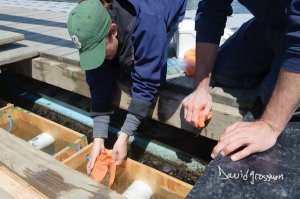
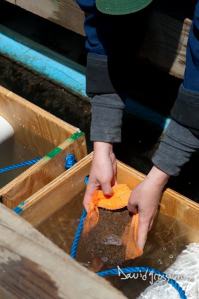
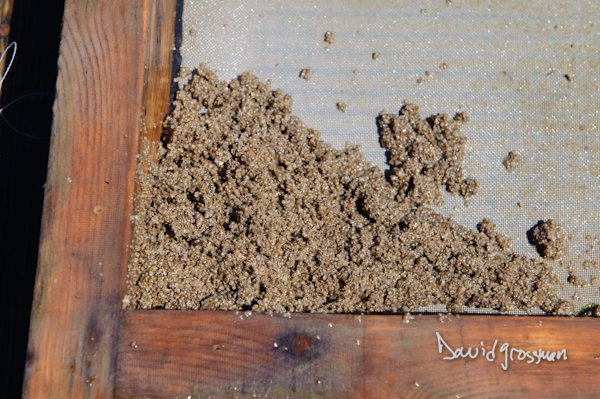
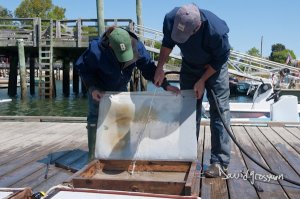
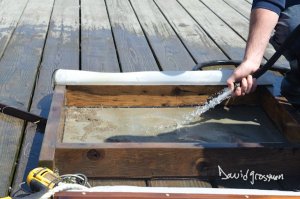
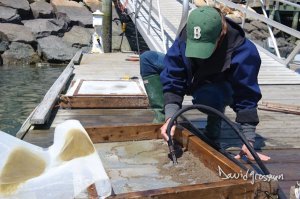
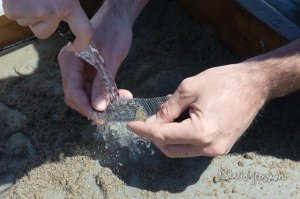
 On Tuesday, I was out on the float and got a call from Skip asking me to drive the boat over to the dock (by myself - ack) to check out the upwellers. I made it over there without knocking into anything and found Skip,

 There are far too many fun stories to tell about this past weekend. Not sure this little blog will do it all justice. But here goes.
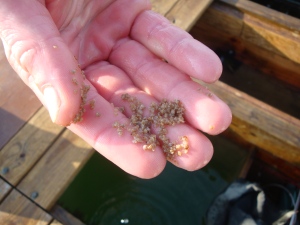 It is officially go time. The last few days have totally changed the dynamic at the farm. There's seed arriving daily and the growers are pumped. I got to the farm yesterday and found Mike George laying face down on the dock -- he was messing with the silo in his upweller which already has tons of little seedlings in place. It's tricky this time of year since the wind is still blowing hard east and can easily pick up and carry the seed out of your hand. But he was happy to show off his new babies.
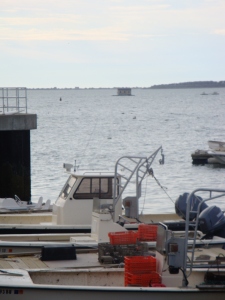 Yesterday I arrived at the marina to find our house transplanted. It had been moved onto the water on Wednesday afternoon (with only a few minor hiccups) and attached to a mooring out in the bay. While it was definitely exciting to get out on the water, I was faced with a whole new set of challenges and adjustments.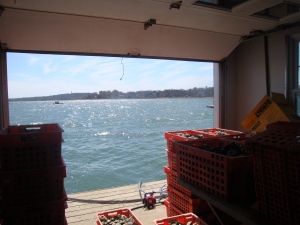
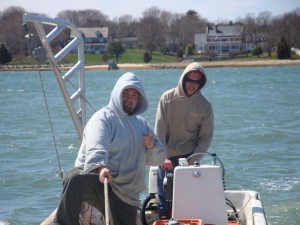
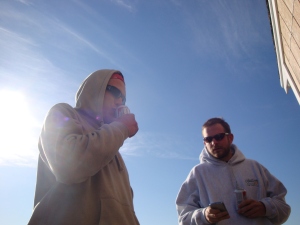
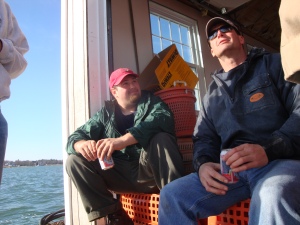
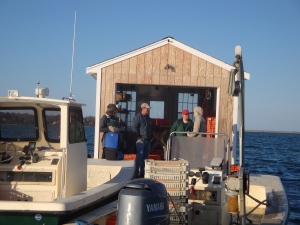
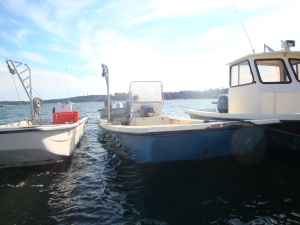
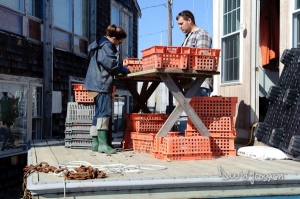
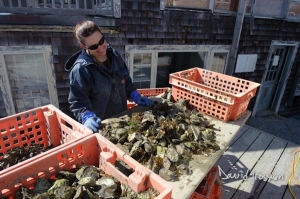
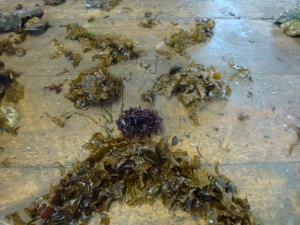 My fourth week on the farm was a rough one. Not sure why, exactly. Could have been the crappy weather, or it might have been our new friend the Brown Frown: seaweed. It gets bad this time of year and makes dragging really rough. Berg went out on Monday afternoon and had a hard time getting crates up since the drag just got filled with the stuff. We were pulling it out of the cull all week.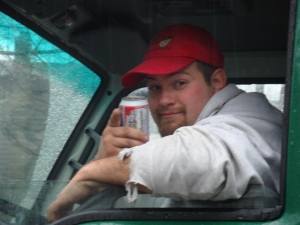
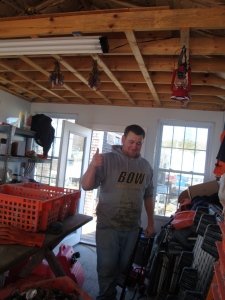
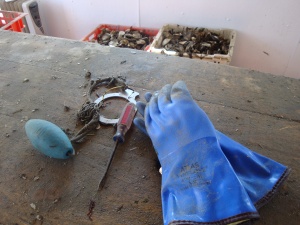 I've gotten a lot of questions about culling. Essentially, we're sorting the oysters but there's a lot more to it than that. At least, it feels like there's more to it since we spend 4 hours a day doing it while standing on our feet. We have a couple of tools, like the three-inch ring, a flathead screwdriver, and our gloves (which are thick and lined for the winter; in the summer we'll wear a lighter pair). Music fuels us, as does a mid-morning coffee break; we do what we can to break up the monotony of moving oysters from one place to another. As for the cull, we're looking for size, cup depth, healthy oysters (any that are nicked or broken go back to the water to repair themselves), and of course, funky stuff (ie: the two-minute time waster). When you tip over a crate of oysters, you'll get about 200 bivalves plus a dozen other odds and ends on the table. Stringy, brown, mud-caked seaweed, neon-green kelp, quahogs, scallops, hermit crabs of every shape and size (they've been turning up a lot lately), broken-off horseshoe crab tails and shells, live spider crabs (A2 hates those), an occasional piece of garbage, and even the lonely chicken bone. Yesterday we turned up a tiny flounder. Today, we found a heart-shaped oyster, my second since starting on the farm.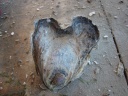
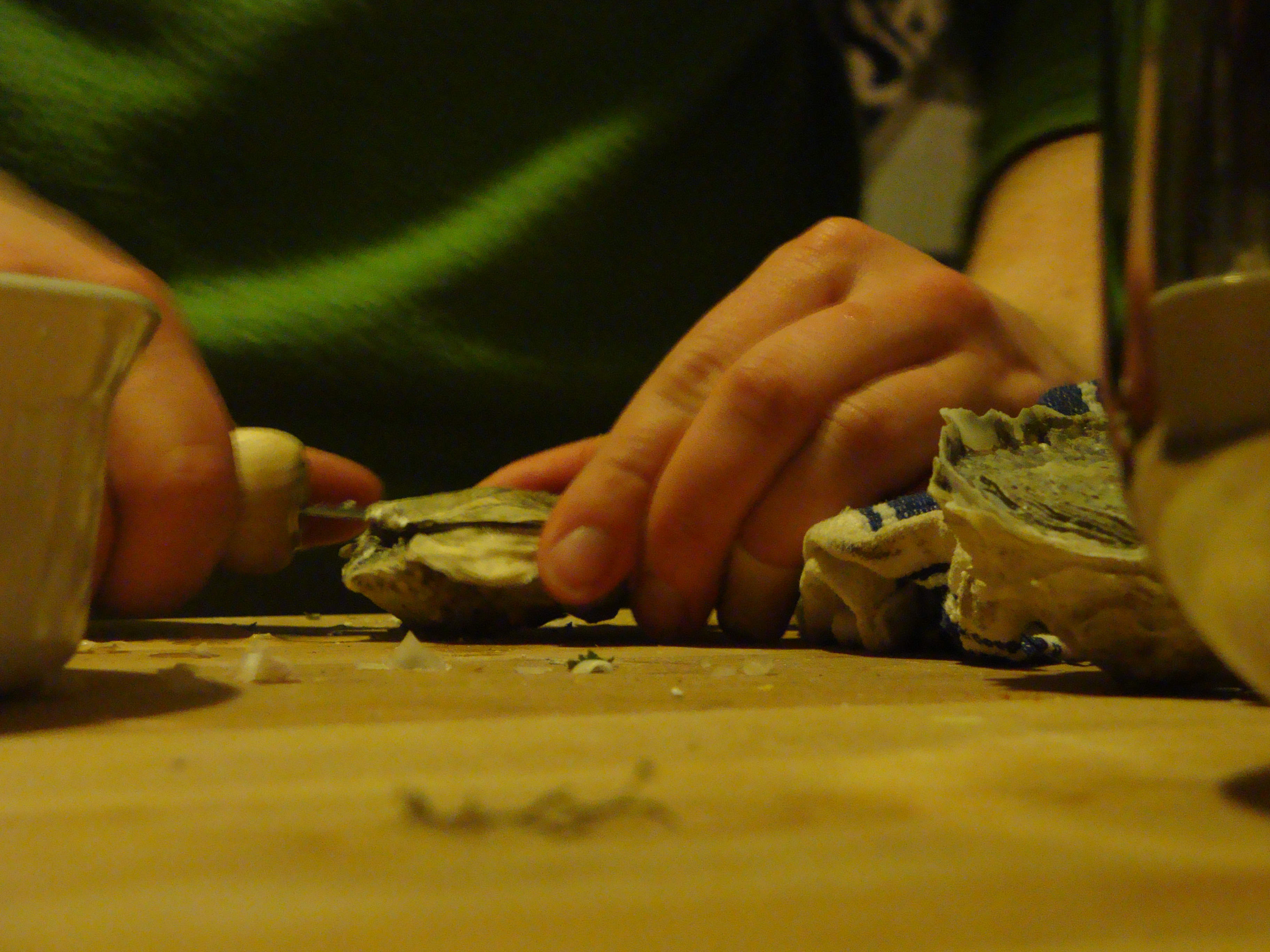 Over our oysters, we chatted about my total lack of skills.
Me: I think maybe I'll finish up the year and then go work as a shucker at an oyster bar. It could fulfill that "working in a restaurant" urge that's been nagging me for awhile.
Dave: Yeah, well, you should probably see how this year goes first. I mean, of all the possible options you have ahead of you, working in an oyster bar has never really come up before.
Me: Yeah. I guess I should learn to shuck oysters well first.
Dave: Or you could just go back to being a writer... you know, like you always wanted to be.
Me: (slurping back my 8th oyster) Riiiggghhhttt.
Over our oysters, we chatted about my total lack of skills.
Me: I think maybe I'll finish up the year and then go work as a shucker at an oyster bar. It could fulfill that "working in a restaurant" urge that's been nagging me for awhile.
Dave: Yeah, well, you should probably see how this year goes first. I mean, of all the possible options you have ahead of you, working in an oyster bar has never really come up before.
Me: Yeah. I guess I should learn to shuck oysters well first.
Dave: Or you could just go back to being a writer... you know, like you always wanted to be.
Me: (slurping back my 8th oyster) Riiiggghhhttt.
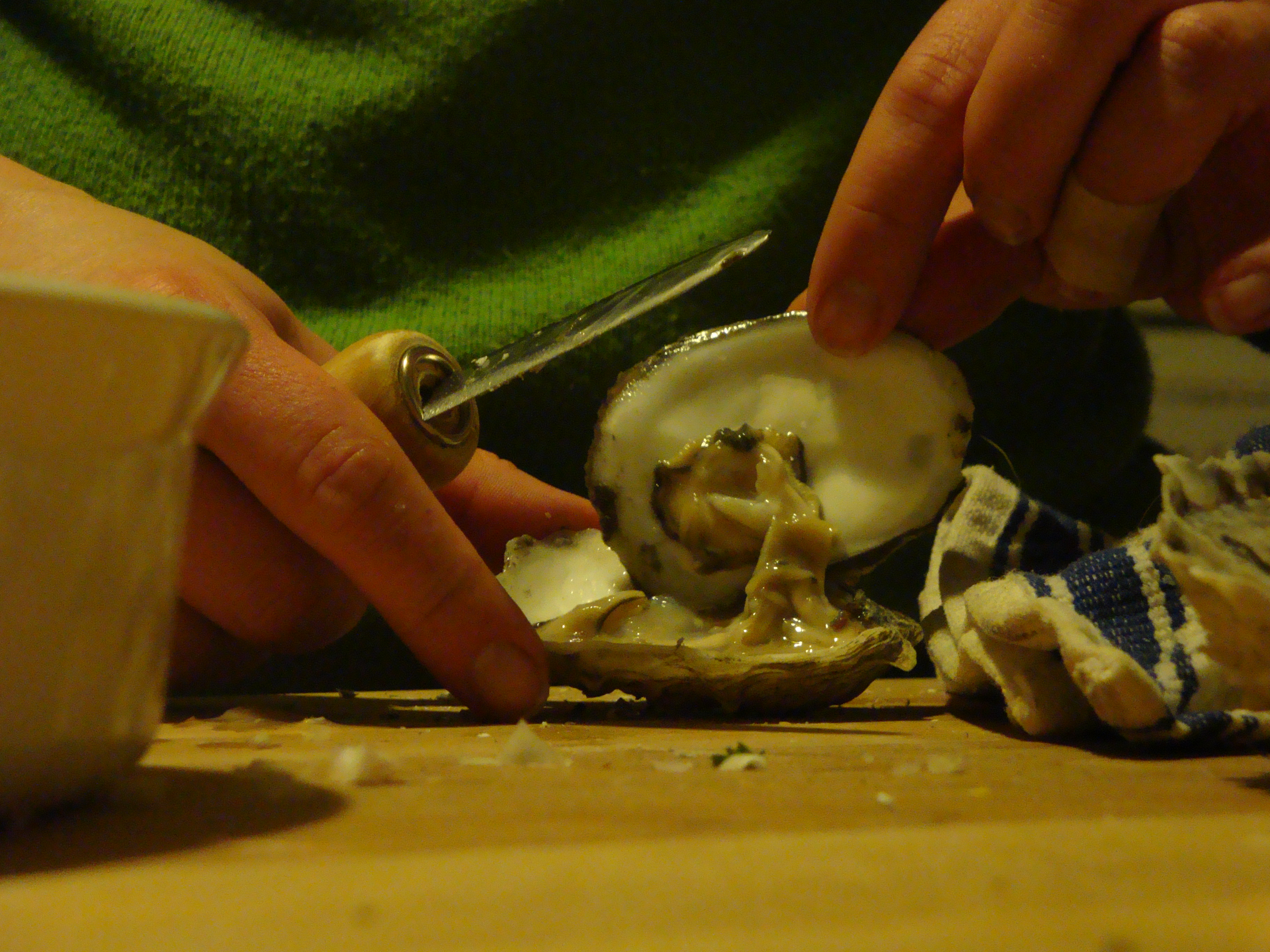
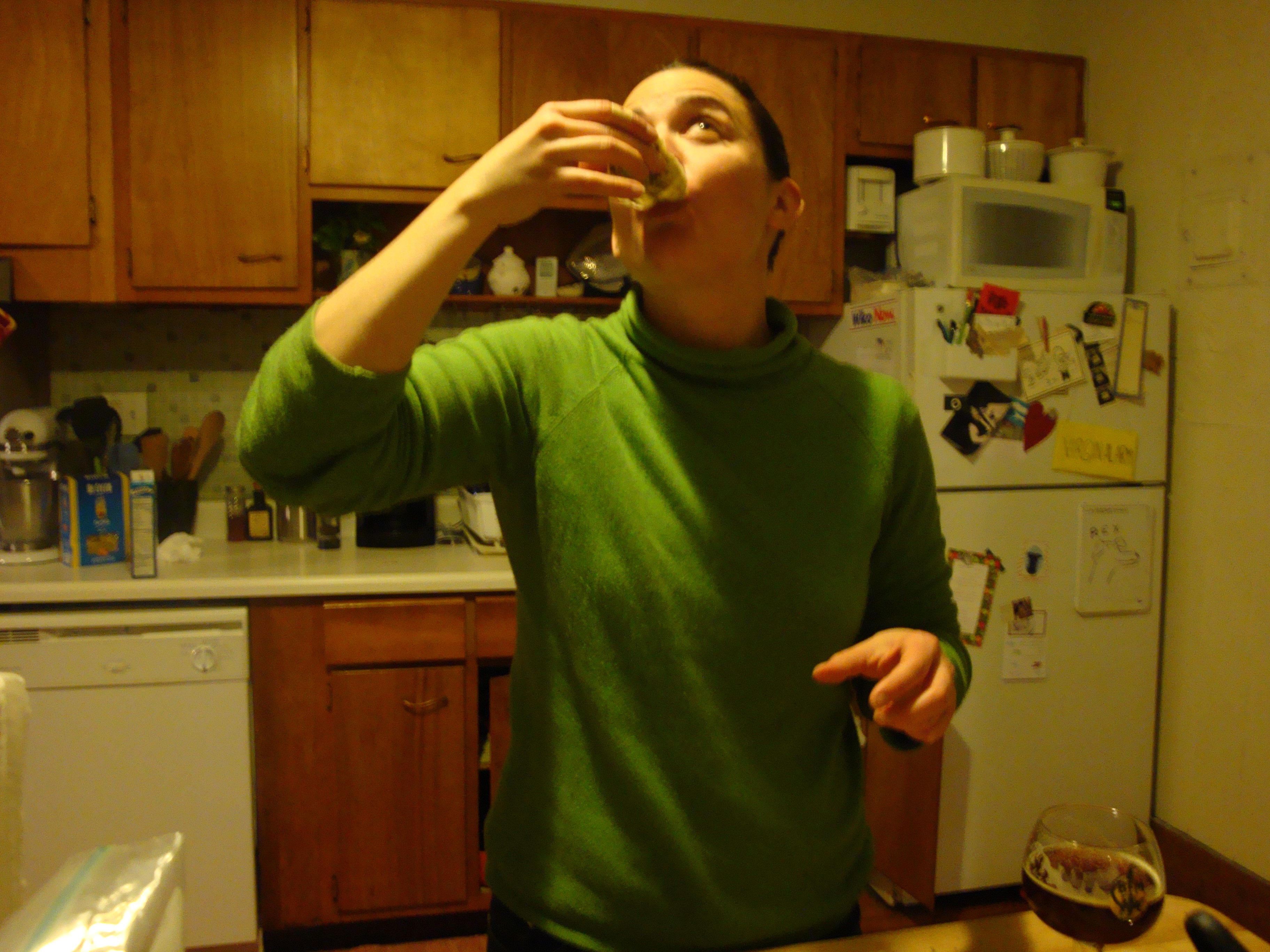
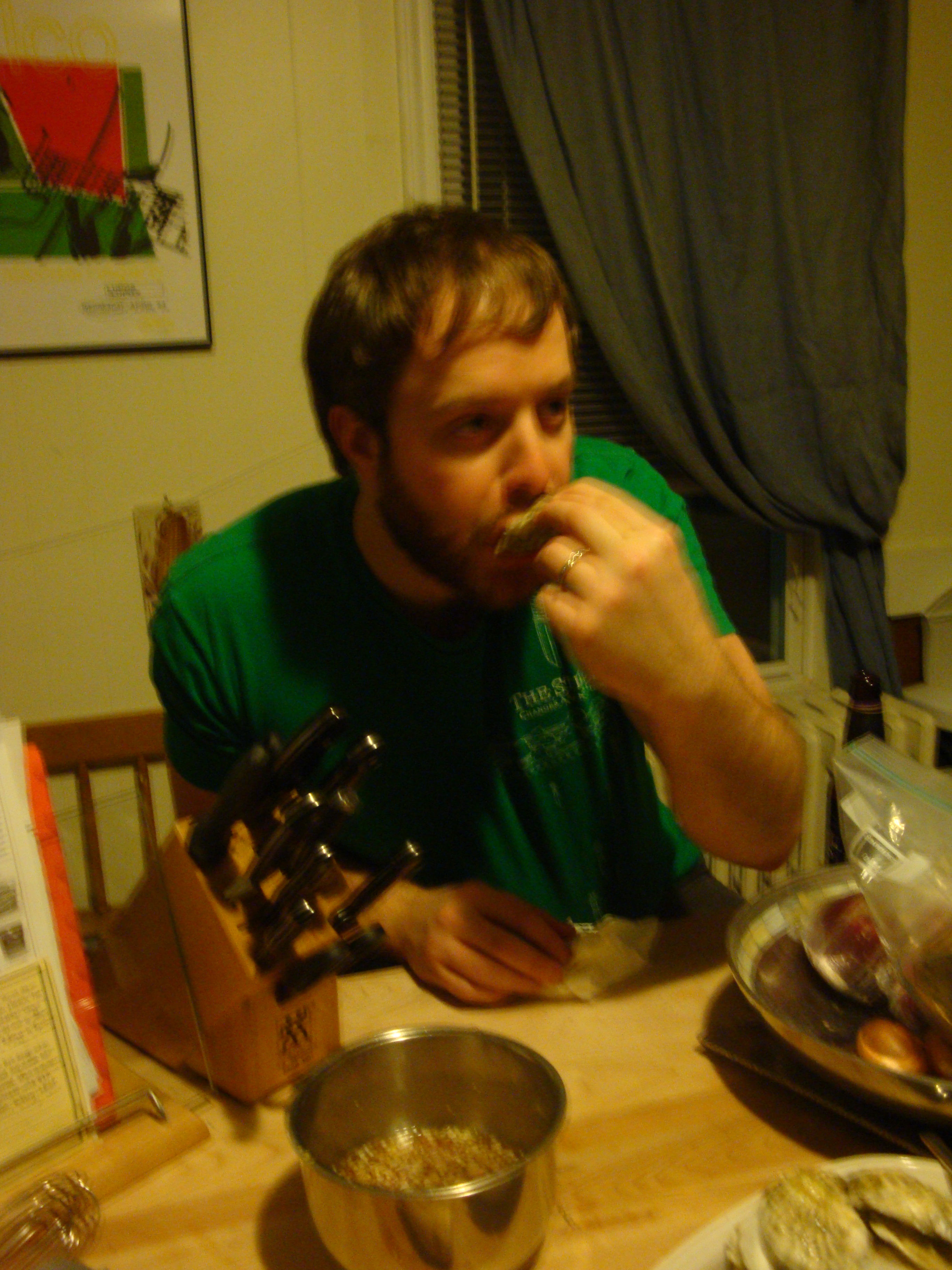
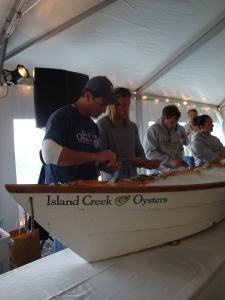
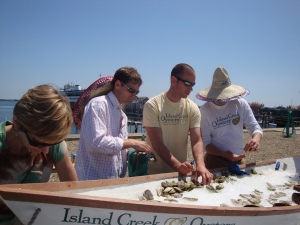
 The International Seafood Show was in town all weekend so Team ICO was in overdrive with buyers' meetings, working the show, and loading in and out. I went over twice - Sunday for a bit and Monday afternoon for the shucking competition. The place was a zoo; the convention center is as massive as an airplane hangar filled with seafood and industry purveyors and their crazy elaborate booths. One corner featured every possible seafood related processing tool (a vacuum for the sea! it'll even slice, dice, and shrink wrap!) while ICO was set up with its shucking boat in the shellfish area. I actually saw a motorcycle designed to look like a shrimp. And the crowd was totally unexpected. Lots of suits, some chefs, and a random smattering of super leggy women...though I'm still not sure where they fit into the picture.
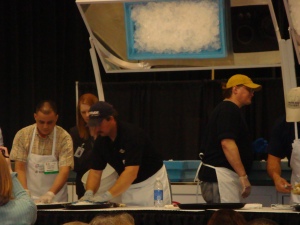
 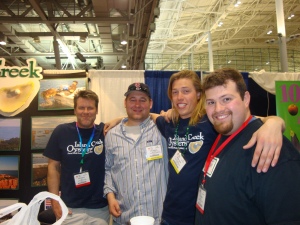 Dave got to see some of the action and meet my crew on Sunday. It was also the day of Southie's St. Patty's Day parade which once again I managed to avoid (seven years in Boston and I still haven't been), so there were plenty of green beads and hats lying around. Monday was a little more entertaining; I worked on the farm in the a.m. and got to the show by 3. My pal Rowan Jacobsen was MC'ing the shucking contest -- I've never actually seen one of these before and apparently there's a pretty intense shucking circuit. The man to beat? A Wellfleet guy named Chopper. Yes, Chopper. He won the world competition last year (right?!) and as we walked up to the contest we actually caught him stretching.
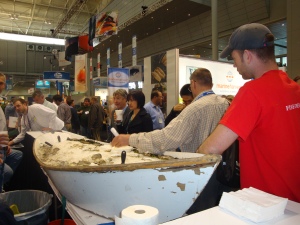 Back at the booth, Mark (Skip's previous farm manager) taught me how to shuck a few and I swear it took me ten minutes to get one open. (Sorry Uncle Jim. It's been a long time since our last Christmas lesson.) I jabbed myself a few times but after 3 or 4 oysters it started to get easier. Matthew suggested I start shucking a dozen every day when I'm done with work to practice. I may make my way onto the circuit yet. Better watch yer back, Chopper.
  Wednesday, Thursday, and Friday we put in some solid work to get our bag numbers filled. As a team, the Andys & I get a specific bag count each week (each bag has 100 oysters) which we'll usually get done by Thursday.
 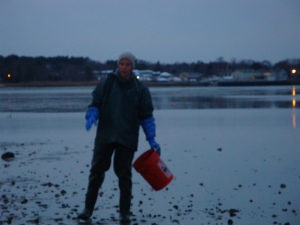 Berg: You're like a roaming water buffalo. Only, you just stand there.
A2: No, you are. You're like a... a...
Berg: What?
A2: I don't know. I couldn't come up with anything. So, Berg. Tsang's for lunch? She wants to go. [They've started calling me She or Her]
Me: I'm starving.
Berg: Alright, I know you want to go to Tsang's. Let's get done with these bags first.
A2: (under his breath) Yes.
Berg: You're like a roaming water buffalo. Only, you just stand there.
A2: No, you are. You're like a... a...
Berg: What?
A2: I don't know. I couldn't come up with anything. So, Berg. Tsang's for lunch? She wants to go. [They've started calling me She or Her]
Me: I'm starving.
Berg: Alright, I know you want to go to Tsang's. Let's get done with these bags first.
A2: (under his breath) Yes. 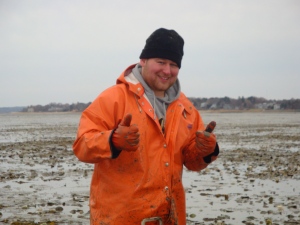
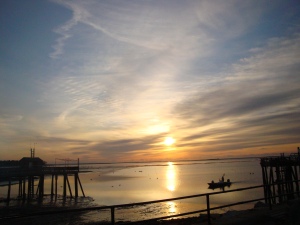
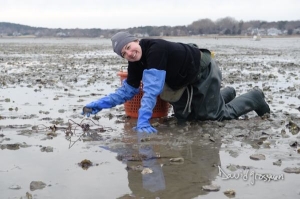 Low tide was around 5:30 tonight so after a full day of culling and bagging (amongst other things), we went out on the tide to hand pick some oysters. This shot is from photog Dave Grossman who came out to chat while we were picking. By the time he got out there, the light was going and it was getting cloudy (rainy day coming up tomorrow) but he managed to get one in.
  Usually it's in the water but it came out in November and will probably go back in some time in April. Today, they needed to move it about ten feet over to allow room for them to move their own floats out to the water. So A2 and I hung back and watched as this giant contraption picked up the float and, after getting stuck in the mud, moved it over. Apparently little things like this can totally disrupt the day.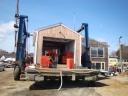
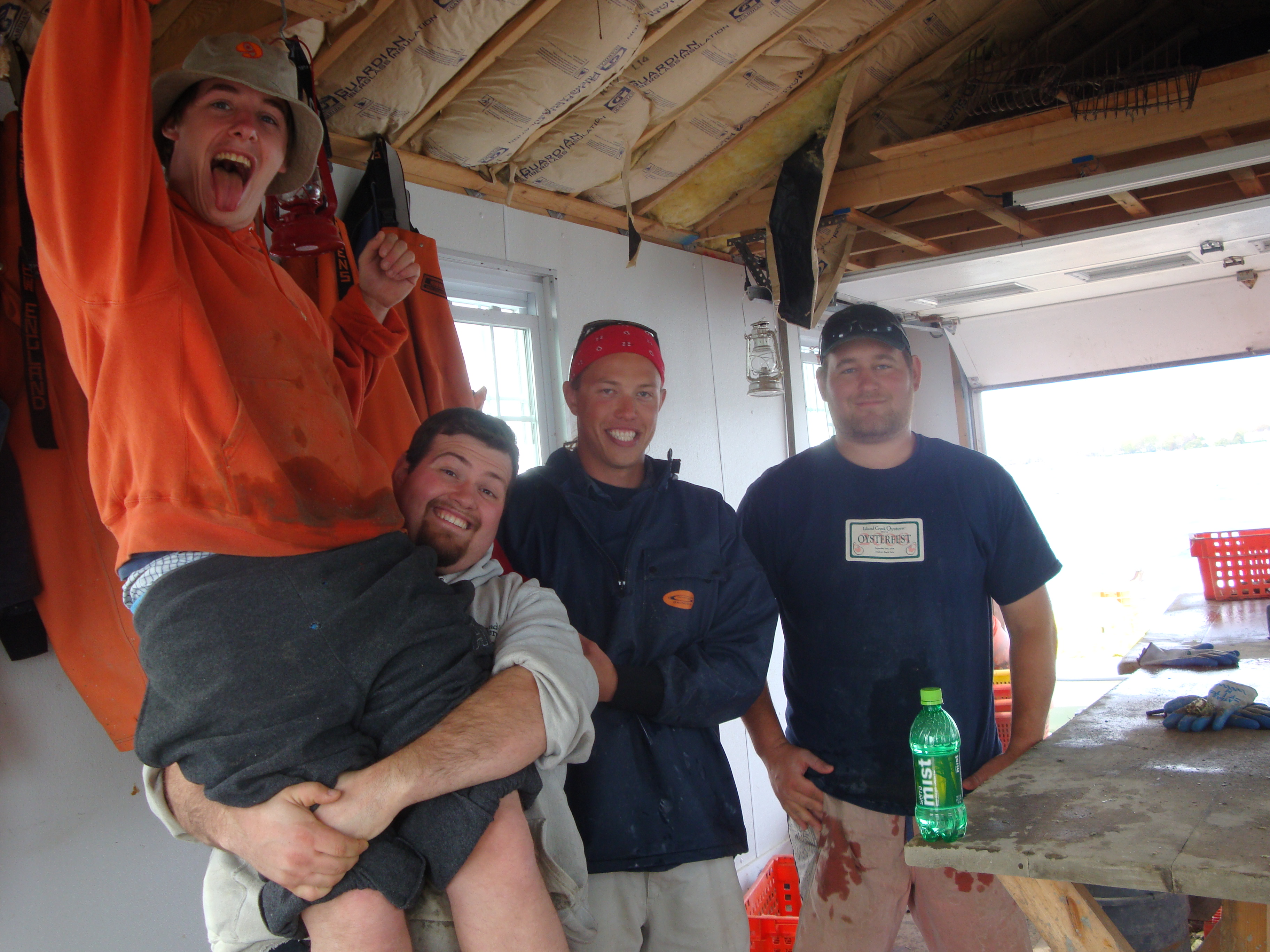
 But ... then I got to the farm. It was 8 a.m. (they have me on a totally reasonable schedule from 8-4), and I was bundled up in my hooded coat, jeans, long underwear and Hunter boots. Immediately, I parked in the wrong spot. Billy Bennett, Skip's dad and one of the growers, is God at the farm (so I was told by Andy... I mean Berg). Billy owns and runs everything. And the exact spot where I parked my car is where he backs his truck up to the side door of the shop. Thankfully Cory (Corydon, the shop manager/man-in-charge) showed me where it was safe to park and then brought me to the shop where I met the legendary Bill and quickly understood why everyone loves him. Huge smile, great handshake, soft, friendly eyes. Just like Skip.
 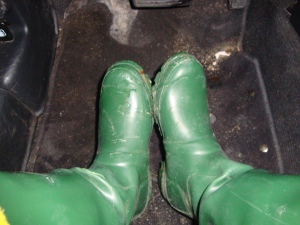 Fashionably mud-covered, right? The problem was, I couldn't feel my feet for most of the morning... and by mid afternoon, I lost feeling in my fingers. So... you know... those are things to work on. Oh, right: I also had to cut my fingernails (mud+long nails=disgusting mess).
 One foot of snow and at least three days of sub-freezing temperatures in front of me. I'm usually tough about cold weather. Sure, I whimper and whine when it first hits me but I have no problem running Rex around the block in 20 degrees (as long as I'm covered head-to-toe, face included). He suffers more than I do. This morning our walk went something like this:
Me: Come on buddy, just jump over the snow bank.
Rex: (pouty face)
Me: It's not that bad, just suck. it. up.
Rex: (sigh. pouty face. whimper)
Passing neighbor: You know, his paws are probably freezing.
Me: Um, I'm sure he's fine, thanks. (guilt sets in). Ok, Rex, back inside.
Rex: (tail wag)
One foot of snow and at least three days of sub-freezing temperatures in front of me. I'm usually tough about cold weather. Sure, I whimper and whine when it first hits me but I have no problem running Rex around the block in 20 degrees (as long as I'm covered head-to-toe, face included). He suffers more than I do. This morning our walk went something like this:
Me: Come on buddy, just jump over the snow bank.
Rex: (pouty face)
Me: It's not that bad, just suck. it. up.
Rex: (sigh. pouty face. whimper)
Passing neighbor: You know, his paws are probably freezing.
Me: Um, I'm sure he's fine, thanks. (guilt sets in). Ok, Rex, back inside.
Rex: (tail wag)
 I figure, as long as my wardrobe is temperature appropriate, I won't end up looking this pitiful.
  I made it to Thursday night's New England shellfish dinner at Rialto and am so glad I did since that's where I met Rowan Jacobsen. His book, The Geography of Oysters, provides a thorough education of oysters and North American terroir. Not a bad gig: He essentially toured the country trying oysters at every turn and, with tremendous detail and thought, explored the flavors imparted by each waterway he visited.
Put on by the
I made it to Thursday night's New England shellfish dinner at Rialto and am so glad I did since that's where I met Rowan Jacobsen. His book, The Geography of Oysters, provides a thorough education of oysters and North American terroir. Not a bad gig: He essentially toured the country trying oysters at every turn and, with tremendous detail and thought, explored the flavors imparted by each waterway he visited.
Put on by the  We continued down into "bustling" Duxbury Center (where there is a Dunkin Donuts but true to town code, has toned-down logo colors) and followed Washington Street to a little parking area by the beach where the entire bay stretched before us. Shore pointed out the leased acreage of the bay marked by buoys sprinkled across the water. It was eerily empty but for a two farmers dragging from their boats; they use a dragging tool, or rake, which pulls oysters from the ground into a basket that is then hoisted into the boat with a winch. "Just wait until you come back this summer," he told Mom. "It's the calm before the storm."
  passing Snug Harbor Fish Co. "You'll eat lunch out here every day," said Shore pointing to the cafe's sunny deck. We pulled up in front of the sorting house which had been pulled out of the water and sat in front of the still-under-construction Maritime School building. Normally, the house is set out in the water like this
  but it came up on land in December and will go back out towards the end of March.